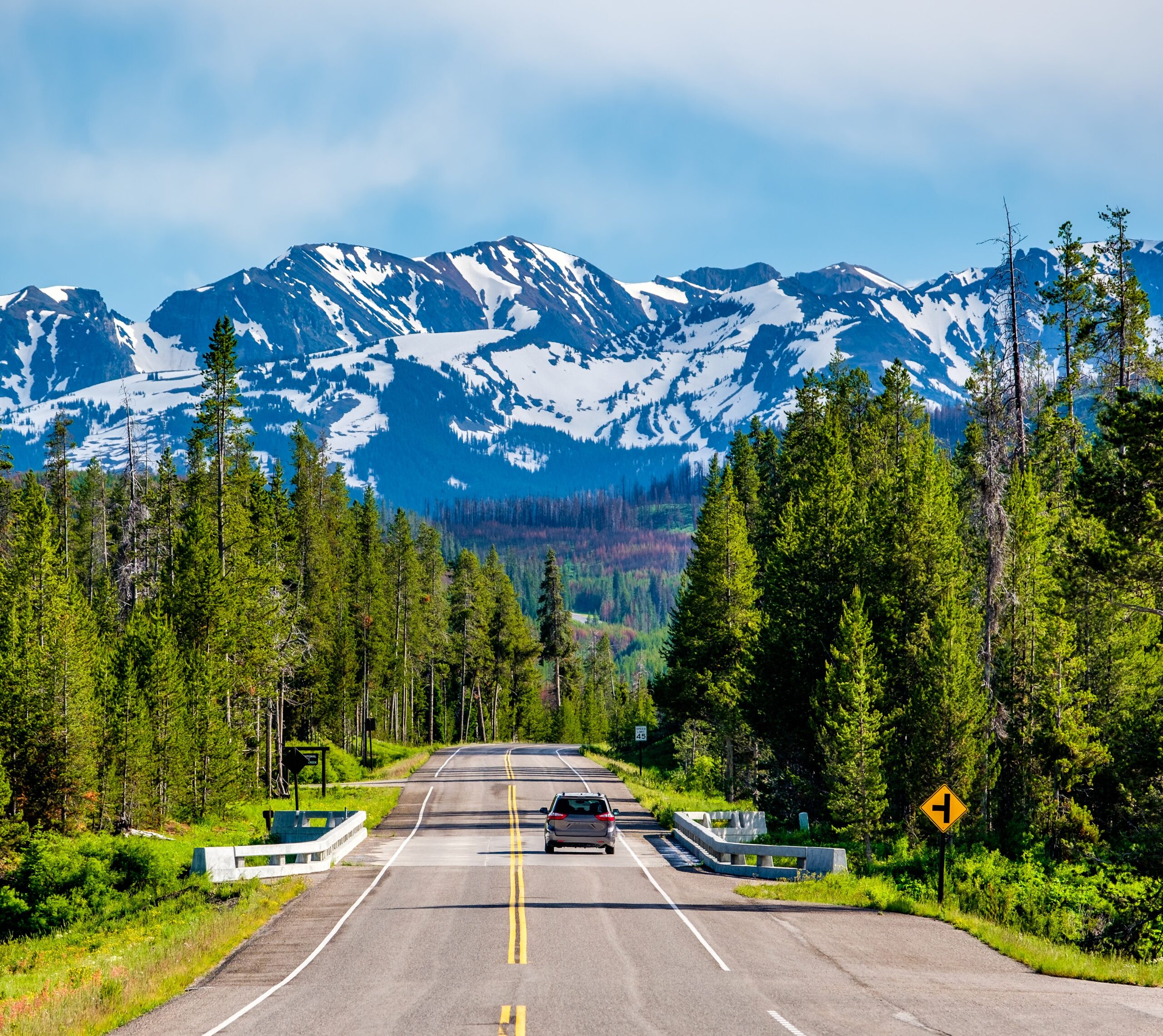

Winter light on red rock
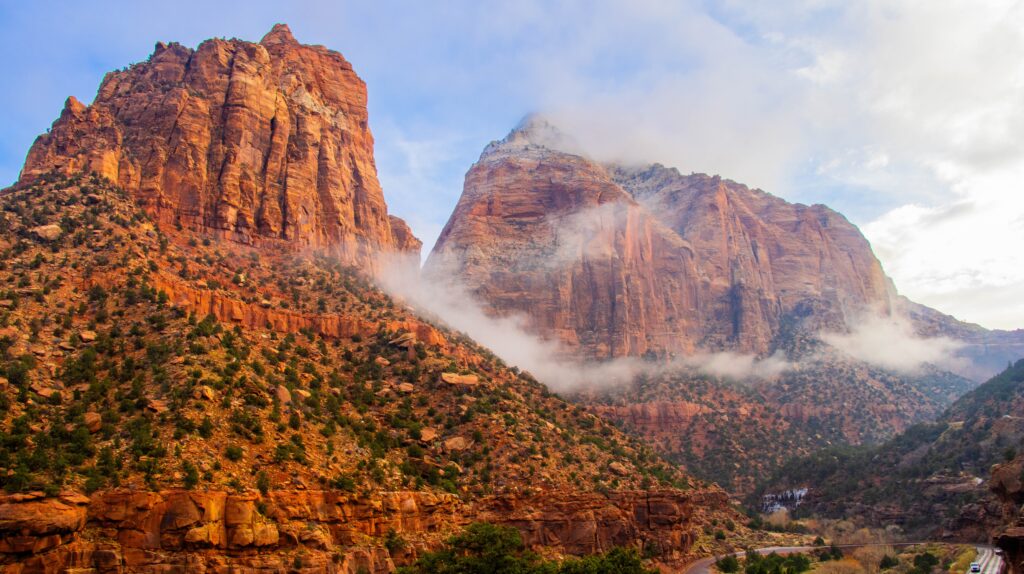
As the sun slowly rises, the light touches the sides of Zion’s grandiose cliffs. Vibrant reds and oranges come to life. It looks as though the cliffs are glowing. A crisp breeze touches your cheek. It’s quiet all around you.
This is what winter in Zion feels like. Zion and nearby Bryce Canyon transform in the colder months. Both parks are far less crowded than they are in the summer. While Zion is relatively cool and has little snow, Bryce Canyon often feels like a winter wonderland.
You won’t want to miss either park, especially since they are only an hour away from each other. Navigating both parks can be a little overwhelming, and that’s where the Action Tour Guide Self-Guided Driving Tour comes in. The audio tour includes both Zion and Bryce Canyon, so you can start in whichever park you like. With the GPS-triggered audio, you can start, stop, and pause the tour whenever you like. So if you want to stop for photos or to take a hike, you can.
Two parks, two moods
While both Zion and Bryce Canyon are stunning, they are quite different.
Zion: In Zion, towering Navajo sandstone walls surround you. In the winter, the red and cream sandstone cliffs are dotted with snow. Icy patches along trails are common, but you can still easily go hiking. Zion feels intimate.
Bryce Canyon: Bright orange hoodoos shoot out of the canyon. Shaped like long, uneven candles, hoodoos are rock spires that look as though they were sculpted by hand. In the winter, snow contrasts with the vibrant oranges. Forests are covered in white. It’s much colder, and icy trails are common. Snowshoes or traction devices are often needed to navigate the trails. Bryce Canyon feels surreal.
How to do this trip without rushing it
Zion and Bryce Canyon are both magical. With such wonder all around you, you don’t want to rush past it.
With the audio tour guide, you won’t. The self-guided tour is the perfect navigator, so you know where and when to stop. Along the way, you’ll hear legends and stories about how the rocks were formed. The tour lets you control the pace, so you can relax and enjoy the incredible views.
Zion as a winter day (the calm version)
One of the first things you’ll see in Zion is the massive Altar of Sacrifice. This cream colored sandstone monolith shoots straight up from the canyon. Surrounded by shadows, the Altar of Sacrifice is breathtaking as the low winter light makes it glow.
As you continue, you’ll see the Sentinel, a red-and-cream sandstone peak formed by an earthquake. In the winter, snow rests on the Sentinel’s edges and cracks.
At the next viewpoint are the Patriarchs. This trio of mountains is so beautiful that people used to think photos of them were fake. Shortly after is Angel’s Landing, one of the most dramatic hikes in Zion. This incredible rock spine rises nearly 1,500 feet from the valley floor. This is the most difficult hike in the park, but Angel’s Landing can be admired from a distance.
Your time in Zion will feel calm and serene.
Bryce Canyon on a winter day (the postcard version)
As you begin your journey through the park’s entrance, you’ll soon pass by Fairyland Point. Sweeping hoodoos rise out of the canyon. Red, orange, and cream spires contrast against the pure snow. The clear sky above makes the contrast even stronger. You’ll think to yourself, how is this place real?
Soon you’ll reach Inspiration Point, one of the most famous viewpoints in Bryce Canyon. A breathtaking panorama of hoodoos stretches out through the canyon. The low winter sun creates long shadows, emphasizing the hoodoos’ texture.
Your time in Bryce Canyon will feel like a picture-perfect day in a winter wonderland.
It is important to keep in mind that while Zion and Bryce Canyon are less busy in the winter, they do get crowds during the holidays. So if you visit during the holidays, be prepared for more people than if you visit during January or February.
If you only have one day: the best compromise
- If you want drama: prioritize Zion
If you want to see extreme contrasts, towering landscapes, and striking landscapes, then Zion is your best bet. Throughout Zion, you’ll see massive sandstone cliffs, deep gorges created by the Virgin River, and vivid colors.
- If you want panoramas: prioritize Bryce
If you want to see high-elevation viewpoints and vast amphitheaters of hoodoos, then you’ll want to visit Bryce Canyon. The signature hoodoos create giant natural bowls and ridges. Rim elevations from 8,000 to 9,000 feet give sweeping perspectives of Bryce Canyon.
- If you want both: do viewpoints only and accept you’ll leave wanting more
If you are pressed for time and only have one day to see both parks, head to the famous viewpoints. In Zion, be sure to see Angel’s Landing, Observation Point, and the Patriarchs. In Bryce Canyon, be sure to see Sunrise Point, Sunset Point, and Inspiration Point.
What to bring, what to expect, and what to check
What to pack: Dress in warm layers. The temperatures in both parks can vary, so you will want to be prepared. You’ll also want to bring a warm hat, gloves, scarf, and sturdy hiking boots. It’s also important to bring water and snacks.
What to expect: In Zion, expect daytime highs to be between 50-55 degrees Fahrenheit (10-13 degrees Celsius). You’ll see a little snow and ice, but not as much as in Bryce Canyon. On the other hand, Bryce Canyon is much colder. Daytime highs are between 25-40 degrees Fahrenheit (-4-4 degrees Celsius). Trails can be icy and tricky to navigate. Both parks have fewer visitors than in the summer (with the exception being around the holidays).
Why winter might be the best first impression
Winter in Zion and Bryce Canyon is unlike anywhere else in the world. The incredible contrast of snow and low winter light against vibrant sandstone and hoodoos feels unreal. And with fewer crowds, it’s much easier to appreciate the beauty all around you.
FAQs
Can you visit Zion and Bryce on the same day in winter?
Do you need to use the Zion shuttle in winter?
Does the audio tour work offline in the parks?
Are reservations required to visit Zion or Bryce Canyon in the winter?
What are the key winter safety tips for Zion and Bryce?
Dress in proper layers: Wear insulating layers underneath waterproof outer layers to ensure you stay warm and dry.
Wear traction devices on your shoes: Trails can be slippery due to ice, so put traction devices on your shoes to avoid slipping.
Bring snacks and hydrate!
Bring tire chains or snow tires: Even though the roads in both parks are paved, winter conditions can still make roads unpredictable. Bring tire chains or snow tires to avoid any hassles!