So You’re Driving 17-Mile Drive — Here’s What You Actually Need to Know
Let’s be honest. You’ve probably already looked at the photos. The lone tree on the cliff. The seals. The impossibly blue water. And now you’re trying to figure out whether this drive actually lives up to the hype — or whether it’s just a pretty road with an expensive toll gate.
Short answer: it absolutely lives up to it. But only if you know what you’re looking at.
That’s the thing about Pebble Beach’s 17-Mile Drive. On the surface, it’s a coastal road with some nice views. Underneath, it’s 17 miles of stories — shipwrecks, hermits, exiled fishermen, ancient trees, and a lone bagpiper who shows up every evening for reasons you’d never guess. Miss those stories, and you’ve just done a scenic drive. Catch them, and you’ll be talking about this trip for years.
Action Tour Guide’s 17 Mile Drive self-guided audio tour was built exactly for this. It runs on your phone, triggers automatically by GPS, and doesn’t need Wi-Fi once you’ve downloaded it. No group, no schedule, no tour bus. Just hit play when you pull through the gate and let the stories come to you.
Here’s a stop-by-stop preview of everything you’ll hear.
First, the Basics: What Is the 17-Mile Drive?
The 17-Mile Drive is a private scenic road that loops through Pebble Beach and Pacific Grove on the Monterey Peninsula. It passes through Del Monte Forest, along some of the most rugged coastline in California, past multiple world-class golf courses, and through the kind of landscape that makes you pull over every five minutes, whether you planned to or not.
There’s a toll to enter — paid at the gate — but it’s usually refundable if you eat at one of the Pebble Beach restaurants, so don’t stress about it too much.
Plan for 90 minutes to 3 hours, depending on how often you stop. If you’re using the audio tour and actually getting out at the good spots, most people end up around 2.5 hours. It’s not a race. The whole point is to slow down.
The Stops — And the Stories Behind Them
1. Kissing Rock & Kissing Rock Parking
This is where the drive starts, and it sets the tone perfectly. Two boulders jut out of the water close enough together that they look like they’re leaning in for a kiss — hence the name. It’s subtle enough that most people blow right past it without a second glance.
Pull into Kissing Rock Parking and you’ll get the right angle. The audio tour explains the local legend around the rock and why it became one of those quietly beloved spots that the regulars know but tourists often miss. A small thing, but a good reminder to slow down and actually look.
2. Spanish Bay
Here’s something most visitors don’t know: Spanish Bay is named after a navigator who was looking for Monterey Bay and completely missed it.
Juan Francisco de la Bodega y Cuadra sailed past in 1769, anchored here thinking he’d found his destination, and moved on without ever realizing his mistake. The bay he was actually looking for was just up the coast.
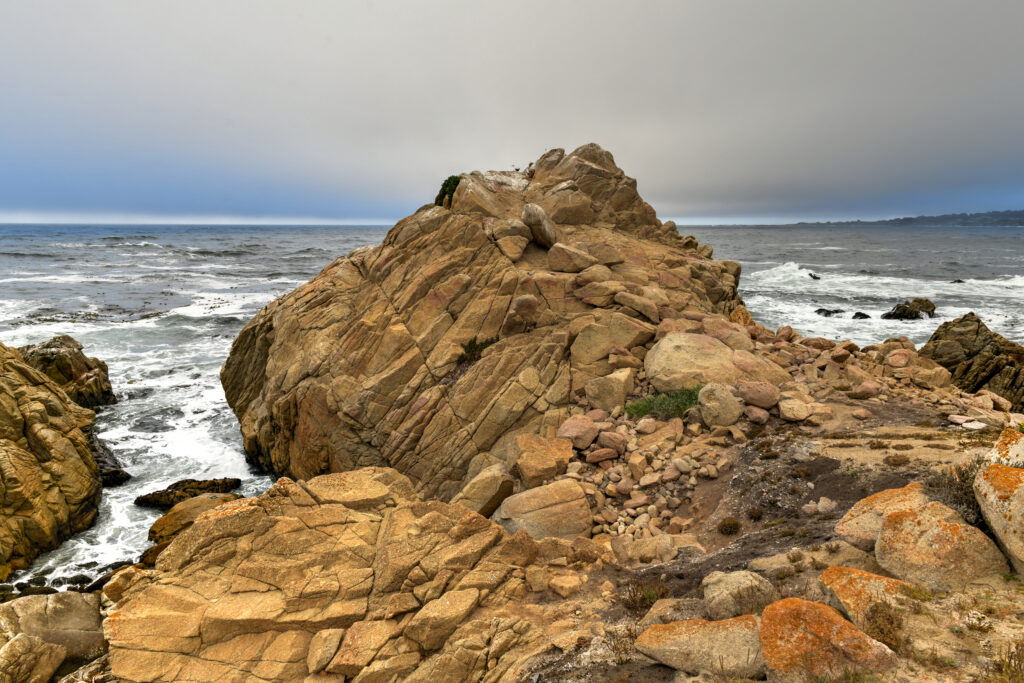
Today it’s one of the most beautiful stretches on the whole drive — a wide, windswept beach framed by the Pebble Beach links course on one side and the Pacific on the other. Every evening, a lone bagpiper walks the 18th hole at sunset. It’s a Pebble Beach tradition that’s been going on for decades, and seeing it in person is one of those moments that feels almost too cinematic to be real.
The audio tour points out the hidden beach access that most people walk right past. Worth knowing.
3. Point Joe
The name is understated to the point of comedy. Point Joe is one of the most dramatic spots on the entire 17-Mile Drive — a rocky headland where two major ocean currents collide in a permanent churn of white water and sea spray. On calm days, it still looks like a storm is rolling in. On actual storm days, it’s genuinely jaw-dropping.
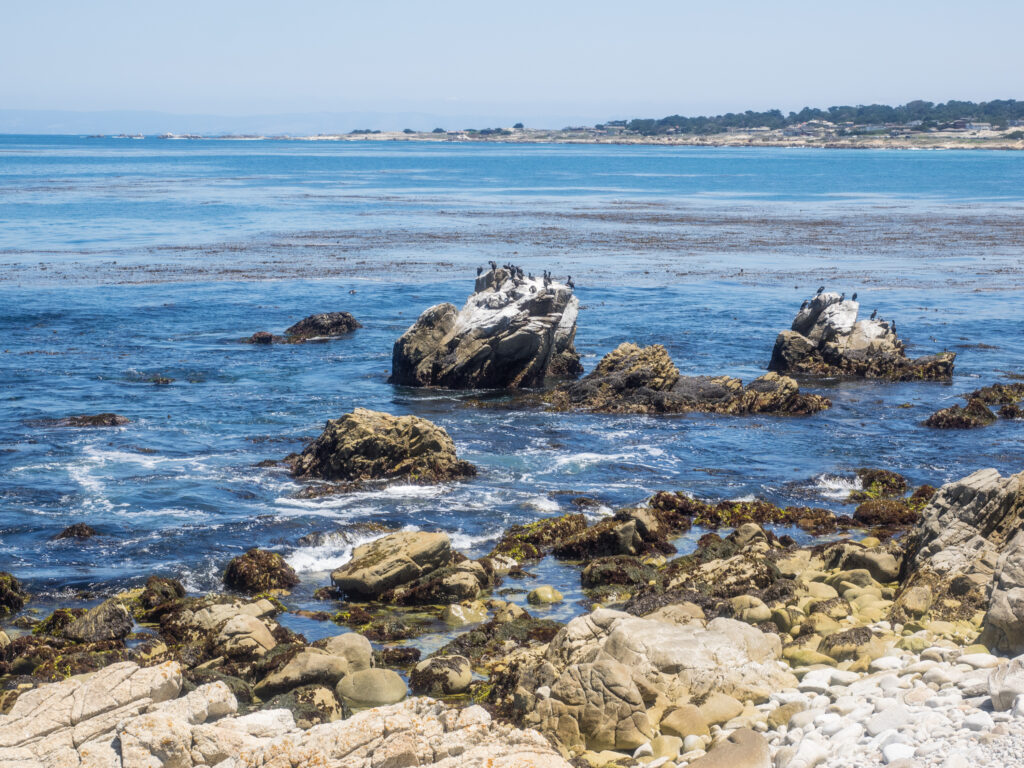
Joe himself was a Chinese man who lived out here alone, in a makeshift shelter on the rocks, for years. Local residents and Pebble Beach management repeatedly tried to move him on. He refused every time. Eventually, they gave up, and the point got its name.
The audio tour also covers why sailors used to dread this stretch — and what’s resting on the ocean floor just offshore.
4. China Rock
A few minutes down the road from Point Joe, China Rock carries its own piece of California history. Chinese immigrant fishermen worked these rocks through the late 1800s, harvesting abalone and shellfish and building a small community along this coast. Anti-Chinese legislation in the 1880s, combined with sustained social pressure, eventually drove them away entirely.
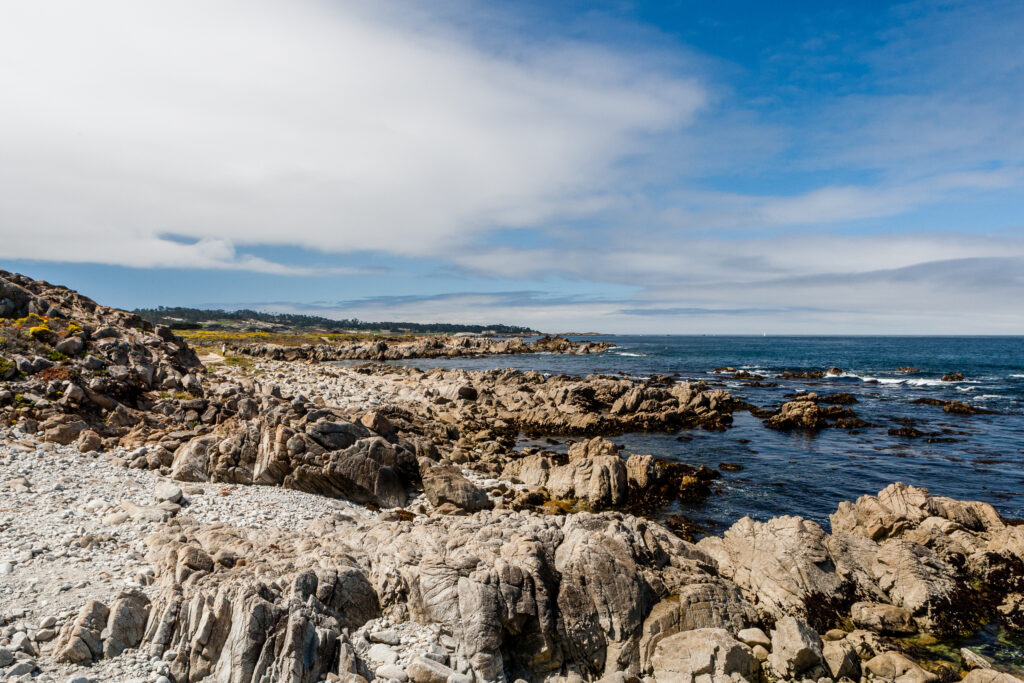
The rock itself is beautiful — broad and dark and salt-scrubbed, sitting in water that turns a vivid teal in the afternoon light. But the audio tour gives it weight. By the time you pull away, it feels like more than a scenic stop.
5. Bird Rock
You’ll hear Bird Rock before you see it.
The noise — thousands of seabirds stacked on every inch of a massive offshore boulder — carries across the water before the rock itself comes into view. Cormorants, gulls, and pelicans nest in colonies that cover the surface so completely that the rock almost seems to be moving.
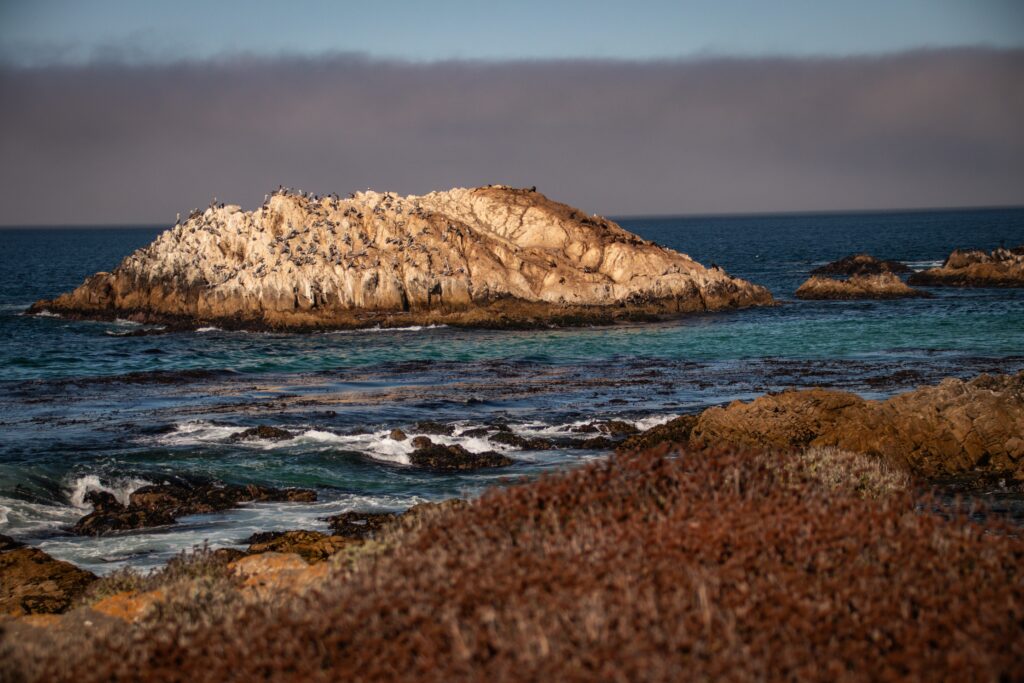
Down at the waterline, harbor seals and California sea lions pile up at low tide, mostly ignoring each other and definitely ignoring you. If you’ve got binoculars, this is the stop to use them.
The audio tour breaks down what you’re actually looking at ecologically — why this specific rock draws so many species, what the seasonal patterns look like, and why this might be the most densely biodiverse spot on the entire Monterey Peninsula.
6. Fanshell Beach Overlook
Fanshell Beach is one of those places that surprises you. It’s a perfect crescent of white sand — soft, photogenic, completely sheltered — and it’s often closed.
Between roughly April and June, harbor seals come here to give birth, and the beach shuts down completely to protect the pups. So, depending on when you visit, you may not be able to walk down. But the overlook above gives you a clear view of the whole beach, and during pupping season, you can watch dozens of mothers and newborns from the path without disturbing them at all. The closed version is better.
The audio tour explains the seal colony’s rhythms through the year and what to watch for at each season. Worth listening to even if you’re not a wildlife person — the detail is fascinating.
7. Lone Cypress
There’s not much to say about the Lone Cypress that the image doesn’t already say. A single Monterey cypress, over 250 years old, growing out of a bare granite shelf above the Pacific. Cables run from its branches to anchor points in the rock, holding it in place against storms that would uproot anything less stubborn.
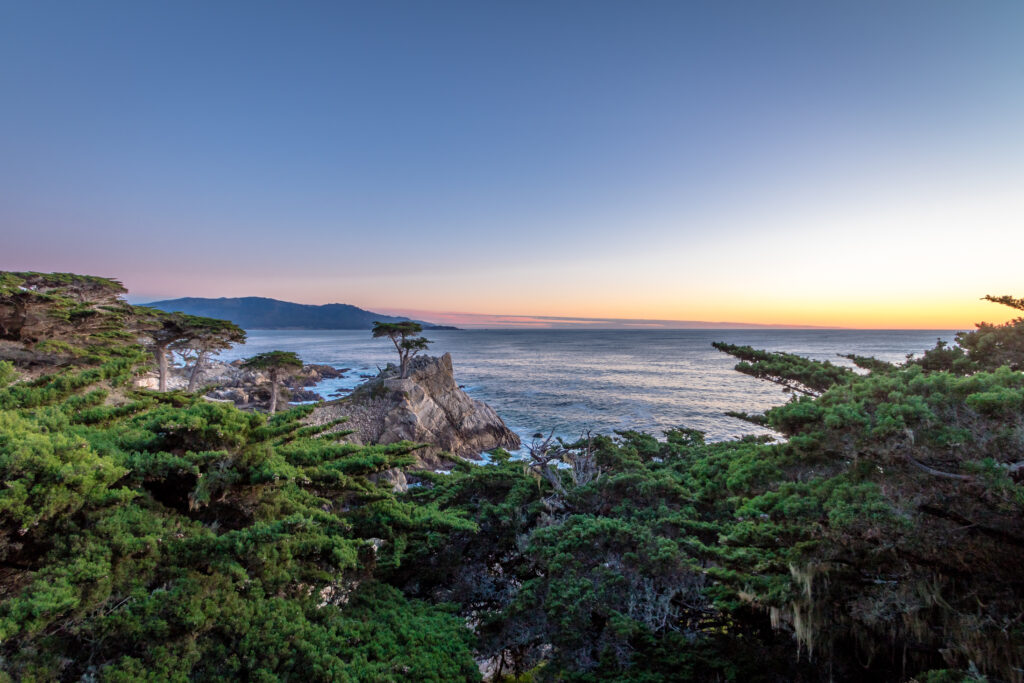
It’s the symbol of Pebble Beach. One of the most photographed trees in the country. And it genuinely earns it — there’s something about standing in front of it that feels like the punctuation at the end of a long, beautiful sentence.
The audio tour goes deep here: the geology of the rock it grows from, the reason Monterey cypresses exist nowhere else in the world naturally except this one small stretch of California coastline, and how a single tree became the face of an entire brand. ‘It’s a better story than you’d expect – but I’ll let the tour tell you.
Why an Audio Tour Makes This Drive So Much Better
You could absolutely do the 17 Mile Drive without one. Plenty of people do. They pull in, take in the pretty views, snap some photos, and leave thinking it was nice.
The difference with the Action Tour Guide 17 Mile Drive self-guided audio tour is context. Every stop has layers — geological, historical, ecological, cultural — and the narration surfaces those layers exactly when you’re standing in front of them, not three days later when you look it up out of curiosity.
A few things that make it practical:
GPS triggers the narration automatically, so you don’t have to manage anything while driving. It works completely offline once downloaded — useful because cell service inside the drive can be unreliable. You can pause, rewind, and move at whatever pace feels right. And it covers every major stop from Kissing Rock through Lone Cypress, plus several smaller ones in between.
Planning Your Visit: Quick Tips
A few things worth knowing before you go:
The most common entry point is the Pacific Grove Gate, and entering counterclockwise from there gives you the most natural flow through the stops in the order above. Weekday mornings are quieter. Late afternoon ended up being my favorite time on the drive — especially around Lone Cypress when the cliffs start catching the warmer light.. Spring brings harbor seal pups to Fanshell Beach — genuinely one of the most remarkable things you can see on this drive. Download the tour app before you arrive, not at the gate.
Come for the Views. Stay for the Stories.
The scenery on 17-Mile Drive is stunning enough to justify the drive on its own. But the history, the wildlife, the people who lived and worked and made their lives on these rocks — that’s what makes it memorable.
The Action Tour Guide 17-Mile Drive self-guided audio tour is how you get all of it, at your own pace, without needing a single tour bus or a rigid schedule.
👉 Grab the audio tour and plan your drive — start here.
The cypress will wait. The seals will be there. All you have to do is show up.