


“Faith built its fortress in the sky, and centuries later, we’re still climbing to understand why.”
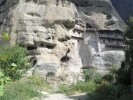
Imagine a landscape where geology becomes poetry and devotion becomes architecture. That’s Meteora. These aren’t ordinary rock formations jutting from ordinary ground. These are ancient pillars that seem to have been sculpted by something larger than erosion, crowned with monasteries that monks actually constructed by scaling sheer cliffs in the 14th and 15th centuries. They came seeking two things: closeness to the divine and escape from Ottoman invasions threatening their faith.
What they discovered was a place where both desires could coexist. Today, their monasteries still stand, still occupied by monks continuing traditions that have survived empires and centuries. UNESCO recognized Meteora not just as a historical monument, but as proof that human determination and spiritual longing can literally reshape what’s possible.
The landscape here tells two interconnected stories. First is the tale of geological time, written in rock formations that took millions of years to become what you see today. Second is the human story, compressed into 600 years of monks climbing impossible heights, building impossible structures, and maintaining impossible faith. When you drive through Meteora, you’re witnessing the dialogue between these two narratives. The rock didn’t ask to be a monastery. The monks didn’t ask for permission from nature. Yet somehow, the two became inseparable.
Our Monastery of the Holy Trinity at Meteora Self-Guided Driving Tour puts this extraordinary place entirely in your hands. Navigate at your own speed, pause when wonder strikes, and absorb Meteora through 20+ audio stories that bring the landscape and its history to life. No tour buses. No schedules. No need to move faster than your own heartbeat.
Your journey weaves through hermit caves, past the Museum of Geological Formations, to vantage points that reveal the full scope of this impossible landscape. You’ll encounter Saint Nicholas Anapafsas, Saint Barbara Roussanou, Varlaam, Great Meteoron, Holy Trinity, and Saint Stephen, each perched impossibly on rock, each with stories of the daring monks who made them real. You’ll learn what “Meteora” truly means, discover the legends of Saint George, and understand why panoramic views and crystal-clear lakes draw pilgrims and seekers from across the world.
A Note on Altitude: Meteora changes people. The combination of physical height and spiritual depth has a way of shifting perspectives. Bring sturdy shoes (these rocks aren’t forgiving), bring water (even spiritual journeys require hydration), and bring an open mind. Come to see rocks and monasteries. Leave having encountered something that questions what you thought you understood about faith, history, and human possibility.
Want all of our tours? Upgrade to Action+:
- An annual $99.99/year subscription offers access to over 230+ tours.
- Unlimited use throughout the year.
- Includes free access to new tours as they are released.
Tour Map
Starting Point
You can begin the tour at the suggested starting locations provided below.
Trikalon 28, Kalampaka 422 00, Greece
Begin from Trikalon 28, Kalampaka 422 00, Greece.
Holy Monastery of the Great Meteoron – Transfiguration of the Saviour, G, Kalampaka 422 00, Greece
You can also begin the tour from the Holy Monastery of the Great Meteoron – Transfiguration of the Saviour, G, Kalabaka, Greece.
How Does It Work?
- Access your tour: Download the Action Tour Guide app and sign in with the same email used for your website purchase. Your tour will appear under My Tours.
- Download your tour: Download it before you go. Once downloaded, no internet or cell signal is needed.
- Start your tour: Open My Tours, select your tour, and tap Start Touring when you reach a starting point.
- Listen your way: Use your phone’s speaker or headphones, or connect to your car’s audio system. Apple CarPlay and Android Auto are not currently supported, compatibility is in development.
- GPS-triggered audio: Stories play automatically as you reach each location along the route.
- Stop and start anytime: Pause, take a break, make a detour, or continue another day. Tours are valid forever (one year for Action+).
Monastery of the Holy Trinity at Meteora Audio Tour
Things to do on the Tour Include:
-
Welcome
-
Geology
-
Hermit History
-
Hermit Caves of Badovas
-
What's in a Name?
-
Museum of Geological Formations
-
Doupiani Rock
-
St. George of Scarves
-
Holy Monastery of Saint Nicholas Anapafsas
-
Caves of Meteora
-
Holy Monastery of Saint Barbara Roussanou
-
World Heritage Site
-
Holy Monastery of Varlaam
-
Holy Monastery of Great Meteoron
-
Viewpoint Meteora
-
Sunset Rock
-
Monastery of the Holy Trinity
-
Holy Monastery of Saint Stephen
Preview The Tour
Tour FAQs
The Monastery of the Holy Trinity at Meteora is significant for its stunning location atop towering rock formations, its rich history, and its role as a center of spirituality and culture.
The monasteries at Meteora were built in the 14th and 15th centuries by daring monks who scaled the rocks to create homes and places of worship.
“Meteora” means “suspended in the air,” which is fitting for this region because the towering rocks of Meteora appear to defy gravity as they rise from the earth.
Meteora is accessible by train or car from major Greek cities like Athens and Thessaloniki.
Visitors to Meteora can expect to see crystal-clear glacial lakes, alpine tundras, and panoramic views of the surrounding landscape.
The best time to visit Meteora for pleasant weather is during the spring and fall when temperatures are milder and the landscape is lush.
Source: Visit Meteora
The self-guided driving tour’s duration depends on your preferences, but most visitors spend approximately 2-3 hours exploring the Monastery of the Holy Trinity at Meteora.
Yes, there are parking facilities near the Monastery of the Holy Trinity, making it accessible for visitors on a self-guided driving tour.
It is advisable to start the self-guided driving tour in the morning to enjoy cooler weather and fewer crowds at the Monastery of the Holy Trinity at Meteora.
Inclusions and Exclusions
 Action Tour Guide app: Download the app to access your purchased tour.GPS-triggered audio: Stories and directions play automatically as you reach each location.Tour anytime: Single tours and bundles never expire and can be used anytime. Action+ is an annual subscription that automatically renews each year unless canceled.Narrated stories: Hear local history, culture, and stories from experienced narrators.Stop and start anytime: Pause, take a break, make a detour, or continue another day.Offline access: Download your tour before you go. Once downloaded, no internet or cell signal is needed.Stories, stops, and directions: Follow the route to key attractions with automatic directions and stories at each location.Transportation: Transportation, parking fees, and tolls are not included.Admission: Entry tickets and reservations are not included. Food and drinks: Meals and drinks are not included.Rental car: A rental car is not included and may be required for driving tours.


