






“It’s so hot the rocks might be sweating.”
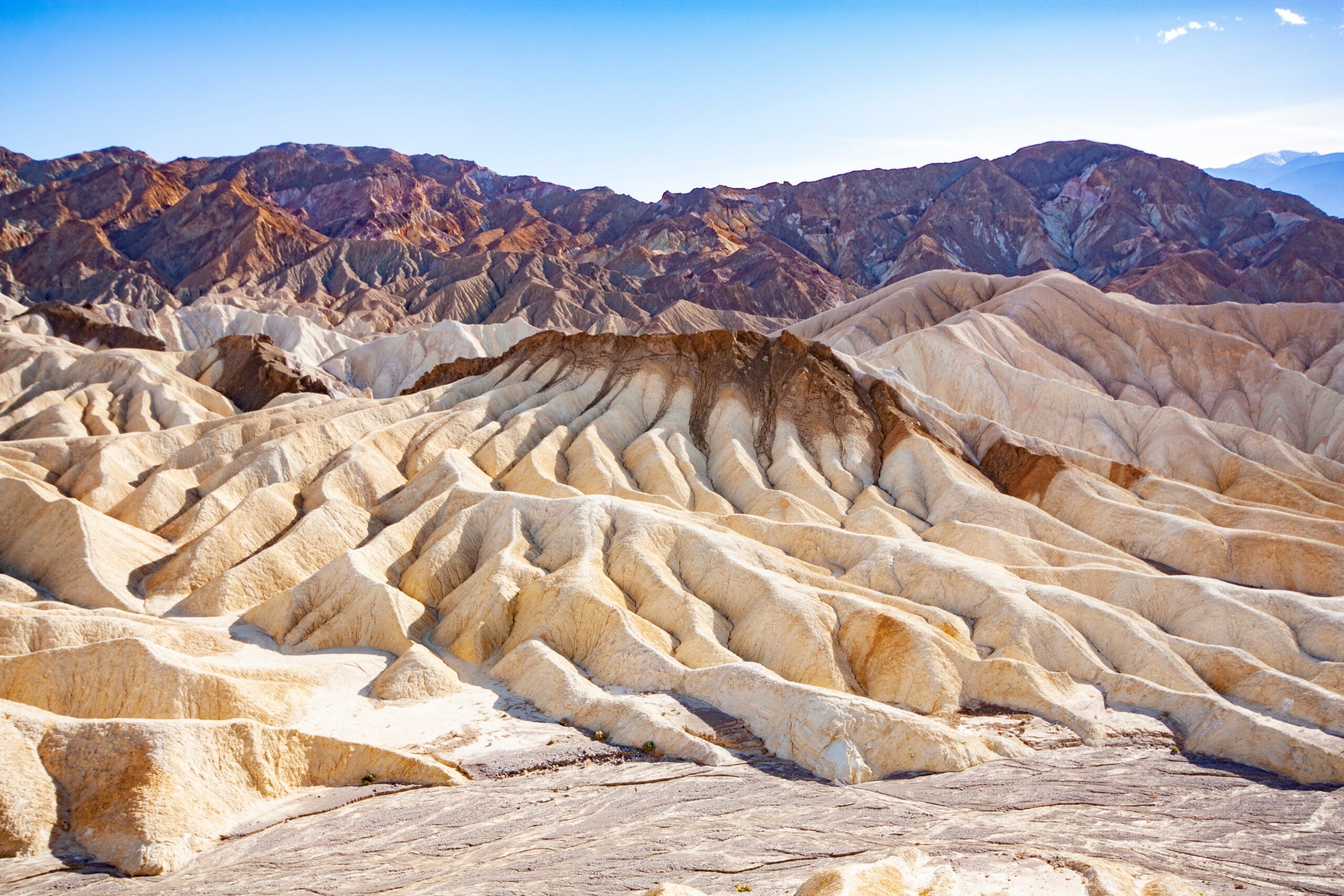
Death Valley is a place of extremes: the hottest, driest, and lowest point in North America. But behind the name lies a surreal and stunning world, where salt flats shimmer like glass, mountains glow with mineral colors, and the silence feels otherworldly.
This isn’t just a desert. It’s a land shaped by time and sun, where canyons twist like spilled paint and gold miners once gambled their lives on hidden fortunes. Step into a place where life feels improbable and the views feel impossible.
With this self-guided audio tour, you’ll explore the valley at your own pace, with stories that play automatically as you drive. Learn how this landscape formed, how people survived it, and what makes each stop more spectacular than the last.
You’ll cruise past the golden glow of Zabriskie Point. Wander the wild textures of Twenty Mule Team Canyon. Stand high above the desert at Dante’s View, then dip into the lowest of lows at Badwater Basin. Artist’s Palette splashes the land with bright purples, reds, and greens. Devil’s Golf Course crackles underfoot like scorched popcorn. And Furnace Creek? Let’s just say the name fits.
Along the way, you’ll hear about mirages, mine towns, and the park’s record-shattering temperatures, plus how to stay safe while soaking it all in.
Disclaimer: The only thing that melts here is your sense of reality. And maybe your ice cream.
Download the Death Valley Trip Planner for more details on how to reach the park, must-see stops, best places to stay, when to visit, activities to do, packing tips, and more!
Hello and Bonjour – Explore Death Valley in English and French!
Our Death Valley tour is available in both English and French, offering a comprehensive and immersive experience for all.
Want all of our tours? Upgrade to Action+:
- An annual $99.99/year subscription offers access to over 200+ tours.
- Unlimited use throughout the year.
- Includes free access to new tours as they are released.
Know Before You Go
NOTE:
- South Badwater Road: No vehicle access to any points of interest south of Badwater Basin. Foot and bicycle traffic permitted. Access is restricted due to debris and damage from flooding.
- Artist Drive: No foot or bicycle traffic. Access is restricted due to debris and damage caused by flooding.
- Bonnie Clare Road & Scotty’s Castle: No access permitted, including pedestrians, due to flood recovery work. Reopening not sooner than 2027 (dependent on project completion).
Nearby Tours
 Driving
2-3 Hours
30+ Stories
30+ Miles
Driving
2-3 Hours
30+ Stories
30+ Miles
 Driving
3-4 hours
70+ stories
67+ miles
Driving
3-4 hours
70+ stories
67+ miles
 Driving
2-3 Hours
25+ stories
12+ miles
Driving
2-3 Hours
25+ stories
12+ miles
 Driving
7-8 Hours
40+ Stories
120+ Miles
Driving
7-8 Hours
40+ Stories
120+ Miles
 Driving
3-4 Hours
50+ Stories
35+ Miles
Driving
3-4 Hours
50+ Stories
35+ Miles
Death Valley Driving Tour Map
Starting Point
You can join the route at any one of the suggested starting locations provided below.
Death Valley Junction, CA 92328, USA
Start on Route 190 at Death Valley Junction, near Route 127.
Beatty, California, USA
Start on NV-374, 9 miles west of Beatty, after the Death Valley National Park sign.
Towne Pass, California, USA
Start on CA-190 at Towne Pass, 12 miles east of Panamint Springs.
How Does It Work?
- Access your tour: Download the Action Tour Guide app and sign in with the same email used for your website purchase. Your tour will appear under My Tours.
- Download your tour: Download it before you go. Once downloaded, no internet or cell signal is needed.
- Start your tour: Open My Tours, select your tour, and tap Start Touring when you reach a starting point.
- Listen your way: Use your phone’s speaker or headphones, or connect to your car’s audio system. Apple CarPlay and Android Auto are not currently supported, compatibility is in development.
- GPS-triggered audio: Stories play automatically as you reach each location along the route.
- Stop and start anytime: Pause, take a break, make a detour, or continue another day. Tours are valid forever (one year for Action+).
Death Valley Audio Tour
Things to do on the Tour Include:
-
Welcome
-
Timbisha Shoshone
-
Gold!
-
The Death Valley 49ers
-
Lost in Death Valley
-
Stranded 49ers
-
Why Is It So Dry?
-
Why Is It So Hot?
-
Safety Reminders
-
Borax
-
Native American Music
-
Dante's View
-
Superblooms
-
Pete Aguereberry
-
Twenty Mule Teams
-
Twenty Mule Team Canyon
-
White Gold
-
Zabriskie Point
-
Christian Brevoort Zabriskie
-
A Thirsty Oasis
-
Furnace Creek Visitor Center
-
Collision and Separation
-
Golden Canyon and Red Cathedral Trail
-
Booms and Busts
-
Ghost Towns
-
Mars Hill
-
A "Zabriskie" Gamble
-
Artist's Drive
-
Artist's Palette
-
Building Death Valley
-
Devil's Golf Course
-
Natural Bridge Trail
-
A Legacy to Be Proud Of
-
Death Valley Today
-
Badwater Basin
Preview The Tour
Tour FAQs
While there’s no official record corroborating it, the most popular explanation is that the name came from the 49er pioneers who had just crossed the valley at great cost. Supposedly, as they finally left the valley behind, one man turned and said “Goodbye, Death Valley,” thus giving the area its name.
Death Valley really is the hottest place on earth, at least as far as surface temperatures go. It’s also the driest place in North America. Despite this, the Timbisha Shoshone people actually lived here hundreds of years ago!
Death Valley is perfectly safe to visit during the summer as long as you take proper precautions! Always bring more water than you think you need, make sure your car’s A/C is functioning properly, and don’t embark on any long hikes. If you keep all this in mind, you’ve got nothing to worry about!
While pets are allowed in all developed areas of the park, like roads and overlooks, they are not allowed on trails. That includes popular trails like the Salt Flats!
The standard $30 per vehicle pass gets you into Death Valley for 7 days, but if you plan to visit other national parks this year, you should definitely opt for the $80 American the Beautiful pass. It’s good for 12 months and gets you into any national park in the country!
What you’ve heard is true: Death Valley really IS the hottest place on Earth! In 1913, the Furnace Creek thermometer measured an air temperature of a sweltering 134 degrees fahrenheit, the highest ever recorded.
If you want to expand your trip beyond Death Valley itself, you can always visit Las Vegas! It’s only a couple hours away and offers plenty of lively activities to break up your national park exploration.
Despite its harsh climate, there are actually animals in Death Valley! Everything from jackrabbits to desert bighorn sheep and even mountain lions can be found in the valley!
Contrary to what you might expect, life is actually quite plentiful in Death Valley, including all manner of mammals, reptiles, and insects. There’s also a thriving micro ecosystem known as the “cryptobiotic crust,” which means “hidden life”!
As you might expect, the weather in Death Valley is HOT, especially during the summer. During the cooler months, however, the valley becomes quite temperate, and can even get chilly at night! Rain is rare, so you probably won’t need to pack an umbrella!
While it’s possible to visit Death Valley in one day, it’s recommended to spend more time to fully explore and appreciate the park’s diverse landscapes and attractions. To see everything the park has to offer, plan for at least 2-3 days.
Cell phone coverage in Death Valley can be limited due to its remote location. While some areas may have reception, there are also areas with no signal. It’s a good idea to check with your service provider and plan accordingly.
The coldest month in Death Valley is typically December. While the park is known for its extreme heat, temperatures can drop significantly during the winter months, especially at night.
Explore 200+ Tours
Inclusions and Exclusions
 Action Tour Guide app: Download the app to access your purchased tour.
GPS-triggered audio: Stories and directions play automatically as you reach each location.
Tour anytime: Your tour is available for unlimited use, anytime and any day.Tours are valid forever (one year for Action+).
Narrated stories: Hear local history, culture, and stories from experienced narrators.
Stop and start anytime: Pause, take a break, make a detour, or continue another day.
Offline access: Download your tour before you go. Once downloaded, no internet or cell signal is needed.
Stories, stops, and directions:Follow the route to key attractions with automatic directions and stories at each location.
Action Tour Guide app: Download the app to access your purchased tour.
GPS-triggered audio: Stories and directions play automatically as you reach each location.
Tour anytime: Your tour is available for unlimited use, anytime and any day.Tours are valid forever (one year for Action+).
Narrated stories: Hear local history, culture, and stories from experienced narrators.
Stop and start anytime: Pause, take a break, make a detour, or continue another day.
Offline access: Download your tour before you go. Once downloaded, no internet or cell signal is needed.
Stories, stops, and directions:Follow the route to key attractions with automatic directions and stories at each location.
 Transportation: Transportation, parking fees, and tolls are not included.
Admission:Entry tickets and reservations are not included.
Transportation: Transportation, parking fees, and tolls are not included.
Admission:Entry tickets and reservations are not included.
 Food and drinks: Meals and drinks are not included.
Rental car: A rental car is not included and may be required for driving tours.
Food and drinks: Meals and drinks are not included.
Rental car: A rental car is not included and may be required for driving tours.