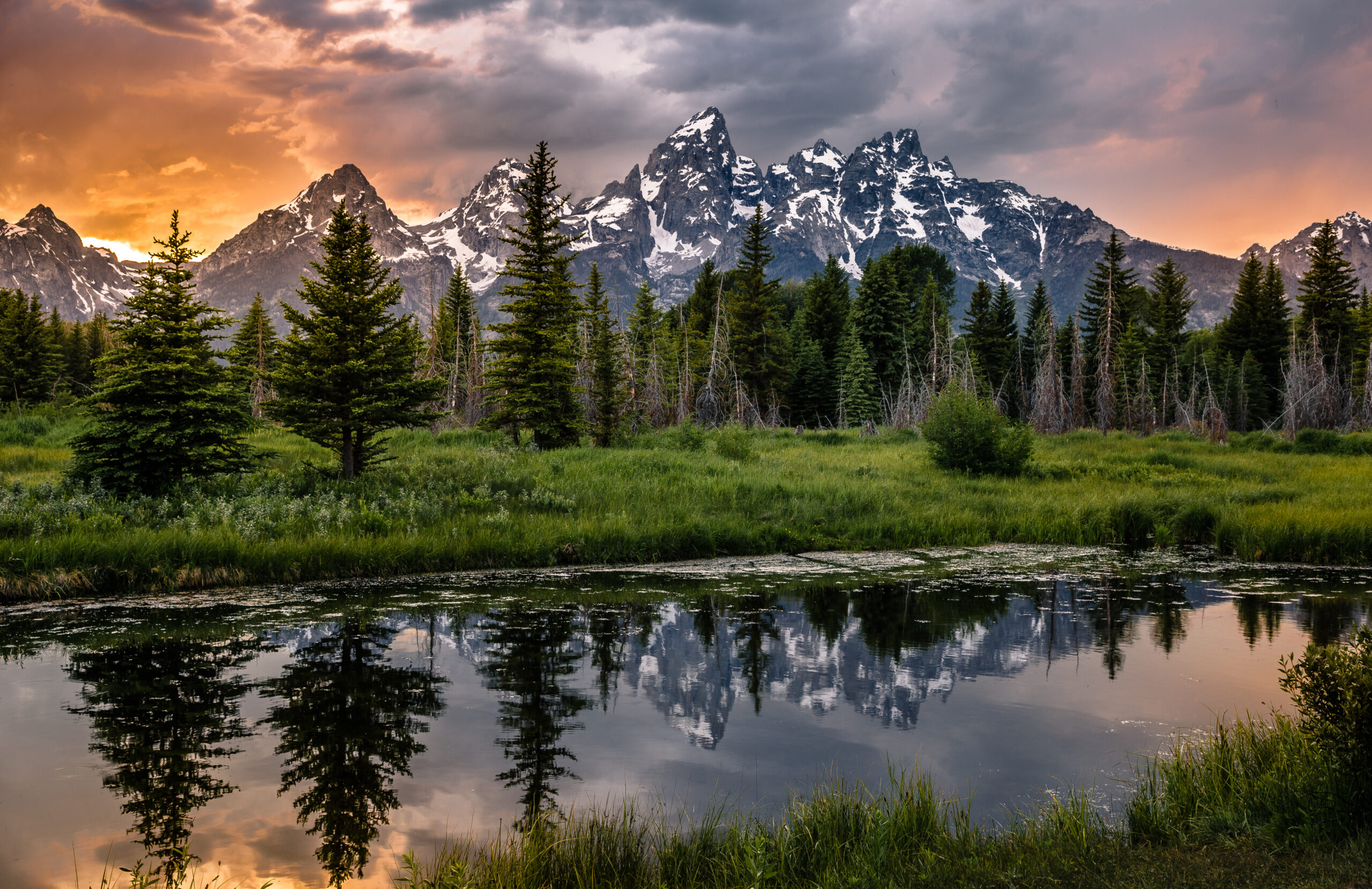
If we talk about the first time I pulled off at the Snake River Overlook and saw the Tetons just sitting there, massive, impossibly sharp, glowing in the early morning light, I completely forgot I hadn’t had coffee yet. That’s what Grand Teton does to people.
But here’s the thing nobody tells you until you’re already booking flights: the park feels completely different depending on when you show up. The same Jenny Lake that feels like a peaceful, glassy mirror in September is a parking-lot nightmare in July. The meadows that look kind of brown and flat in August are absolutely carpeted in wildflowers six weeks earlier.
So, when should you actually go? Let’s talk through it season by season.
Quick Answer: When Is the Best Time to Visit Grand Teton National Park?
If you just need a straight answer, late June through early September is when most people visit, and for good reason. Everything’s open, the weather’s cooperative, and the park is at full capacity (in every sense of the word — including the parking lots).
But if you want the best experience and the best time to visit Grand Teton National Park rather than just the most popular one? September is the month. Fewer people, golden aspens, elk bugling at dawn, and temperatures that are actually pleasant for hiking rather than sweaty and thunderstorm-prone.
Here’s the honest breakdown at a glance:
| Season | Months | Crowd Level | What Makes It Special |
| Spring | April–May | Low | Wildflowers, thundering waterfalls, baby wildlife everywhere |
| Summer | June–August | Very High (Peak) | Everything’s open, long days, classic Grand Teton experience |
| Fall | September–October | Moderate | Fall color, elk rut, and some of the best hiking weather |
| Winter | November–March | Very Low | Silence, snow, a completely different kind of magic |
Grand Teton Seasons, Honestly Described
Spring (April – May): The Park Waking Up
Spring in Grand Teton feels like a secret. Most people haven’t thought about their summer vacation yet, the tour buses haven’t arrived, and the park is doing some of its most spectacular things completely unobserved.
Grand Teton spring wildflowers start showing up in late April at lower elevations. We’re talking bright yellow balsamroot blanketing the hillsides, lupine turning whole meadows purple, Indian paintbrush poking up along the roadsides. It’s genuinely one of the prettiest things in the American West, and most people miss it entirely.
The snowmelt is also at full force, which means the park’s rivers and creeks are running fast and loud. Taggart Lake Trail can still have snow patches into May at higher sections, so check conditions before you go, but lower trails are often perfectly walkable by mid-April.
Grand Teton weather in spring:
-
- April: 30°F–55°F — pack layers, mornings are legitimately cold
-
- May: 38°F–65°F — starts feeling like spring, especially midday
Wildlife-wise, spring is extraordinary. Bison calves on wobbly legs. Bear moms and cubs emerge from hibernation and are hungry. Moose wading through the shallows. If you have any interest in wildlife at all, spring gives you more genuine moments per hour than any other season.
The catch: some roads and facilities are still closed in early April, and you’ll need to check what’s accessible before planning specific stops. But if you can be a little flexible, spring rewards that flexibility generously.
Spring is great for: Photographers, wildflower lovers, anyone watching a budget (hotels and tours are cheaper), and people who genuinely dislike crowds.
Summer (June – August): The Full Grand Teton Experience
Look, summer is peak season for a reason. By mid-June, everything is open — every trail, every visitor center, every service. The days stretch long and golden. The Teton Range looks exactly like every photo you’ve ever seen of it. This is Grand Teton running at full power.
If it’s your first visit, summer honestly makes sense. You won’t have to worry about closed roads or wondering if a particular trail is accessible. Jenny Lake is doing its mirrored-reflection thing. The Jenny Lake Ferry is running. Step inside the Chapel of the Transfiguration for one of Grand Teton’s most unforgettable views — the entire altar window perfectly frames the mountains behind it. The full Jackson Lake provides a breathtaking overlook.
Grand Teton weather in summer:
-
- June: 45°F–75°F — occasional afternoon thunderstorms, so start hikes early
-
- July: 50°F–80°F — warmest month, also the busiest by a wide margin
-
- August: 48°F–78°F — still great, afternoon storms remain common
The honest downside? July is genuinely overwhelming if you’re not prepared. Jenny Lake’s parking lot fills by 8 AM. The Taggart Lake Trailhead gets packed. If you’re rolling in at 10 AM hoping to grab a spot and hit the trail, you’re going to spend an hour just looking for parking.
The fix is simple: get up early. Sunrise in Grand Teton is spectacular anyway — the light on the peaks is pinkish-gold, and the air is still cool and crisp. Treat it as a feature, not a burden.
Summer is great for: First-time visitors, families with kids, and anyone who wants every option available without worrying about closures.
Fall (September – October): The Part Nobody Tells You About
This is the one I want to shout from the rooftops. September – Best time to visit Grand Teton National Park, full stop.
The crowds vanish after Labor Day weekend like someone flipped a switch. The temperatures drop into that perfect hiking range – cool enough that you’re not sweating through your shirt on the way up Taggart Lake Trail, warm enough that you’re not miserable. And the aspen groves? By mid-September, they’ve turned a color of gold that you genuinely can’t photograph accurately because no camera quite captures it.
Then there’s the elk rut. If you’ve never heard a bull elk bugling at dawn — this low, haunting, almost prehistoric sound carrying across an empty meadow — it’s one of those wildlife moments that sticks with you for years. September and October are when it happens, and Grand Teton is one of the best places in the country to witness it.
Grand Teton weather in fall:
-
- September: 35°F–68°F — clear days, chilly nights, genuinely perfect hiking weather
-
- October: 25°F–55°F — beautiful but be ready for cold snaps and possible snow at elevation
Most trails stay accessible through September. By October, some facilities start closing for the season, and higher trails can get early snow. Check the NPS website for current conditions if you’re going in the second half of October.
Fall is great for: Return visitors, photographers, wildlife enthusiasts, couples looking for a quieter, more intimate experience with the park.
Winter (November – March): For the People Who Really Want to Be Alone With It
Winter Grand Teton is a different park entirely. Most of the roads are closed. The visitor services shrink down to almost nothing. And the mountains – already dramatic — become something out of a dream, white and enormous against skies that get startlingly blue on clear days.
If you’re a snowshoer or cross-country skier, this is your season. Wildlife is actually easier to spot in winter — moose, bison, and the occasional wolf stand out clearly against the snow. There’s a stillness to the park in January that’s hard to find anywhere else.
It’s not for everyone. You need to be comfortable in the cold, you need to be self-sufficient, and you need to accept that a lot of what makes summer Grand Teton so immediately gratifying simply isn’t accessible. But for the right traveler, a winter visit is unforgettable in a completely different way.
Winter is great for: Cold-weather adventurers, photographers who want dramatic solitude shots, people who’ve done summer Grand Teton and want to see its other face.
Grand Teton Fall vs Summer: Let’s Actually Settle This
People ask about the best time to visit Grand Teton national park, so here’s the unfiltered take:
Go in summer if it’s your first visit, you’re bringing kids, you want guaranteed access to every trail and activity, or you’re planning to take the Jenny Lake Ferry over to Hidden Falls and Inspiration Point, a summer highlight that’s hard to replicate any other time.
Go in fall if you’ve been before, you care about photography, you get frustrated by crowds, or you want those aspen groves and that elk bugle more than you want to check every trail off a list.
There’s no wrong answer. The park is genuinely spectacular in both seasons. If you can swing two trips? Do it.
Make the Drive Count: Grand Teton National Park Audio Tour
Whenever you go, one thing that makes a real difference is having context for what you’re looking at. The mountains are beautiful on their own — but knowing why the Tetons are so unusually sharp (no foothills — they just shoot straight up from the valley floor, which is geologically wild), or what the Chapel of the Transfiguration meant to the early settlers who built it, or why the Jackson Lake Dam has such a complicated history — all of that makes the experience richer.
That’s exactly what the Action Tour Guide Grand Teton National Park Audio Tour does. It’s a self-guided driving tour you run from your phone, narrating the park’s history, geology, and wildlife stories as you pull up to each stop. No scheduled tour times. No waiting for a group. Just the park and a great story at every turn.
Stops the tour covers:
-
- Chapel of the Transfiguration – you have to see the altar window framing the Tetons to believe it
-
- Taggart Lake Trailhead – the starting point for one of the park’s best moderate hikes
-
- Jenny Lake – the crown jewel, full stop
-
- Mountain View Turnout – the panorama shot everyone’s trying to take
-
- Jackson Lake Dam – more interesting than it sounds, genuinely
-
- Jackson Lake Overlook – Wyoming’s largest lake backed by the full Teton Range
Trails covered:
-
- Taggart Lake Trail — 3.8 miles out-and-back, gorgeous mountain reflections
-
- Lakeshore Trail & Hermitage Point — a varied, rewarding route along Jackson Lake
-
- Jenny Lake Ferry — technically a boat crossing, but it feels like part of the adventure
One practical note: download the tour before you enter the park. Cell service gets patchy fast inside the boundaries, and you don’t want to be fumbling with loading screens when you’re trying to pull into the Jenny Lake overlook.
👉 Grab the Action Tour Guide Grand Teton Audio Tour here and hear the park’s stories as you drive through them.
Things to See, Before You Go
Book your lodging early – embarrassingly early. Summer accommodations inside or near the park fill up 6 to 12 months in advance. That’s not an exaggeration. If you’re thinking about a July trip in May, just know you’re likely already considering options outside Jackson.
The early morning thing is real. Yes, you’ve heard it before. Yes, it’s worth repeating. Arriving at 7 AM instead of 9 AM is the difference between a meditative experience and a parking lot stress spiral. Plus, the light is genuinely better.
Weather changes fast at altitude. A warm July afternoon can turn into a cold, stormy evening in under an hour. Layers aren’t optional – they’re just part of hiking in the Rockies.
Teton Park Road doesn’t open until late May. If you’re visiting in early spring, some sections will be closed. Check the NPS site for current road conditions before planning your route.
Plan Your Trip, Then Let the Park Do the Rest
Grand Teton doesn’t really have a bad season — it just has different seasons, each with its own particular kind of magic. The summer crowds are worth it for a first visit. The fall quiet is worth chasing if you can. Spring will genuinely surprise you. And winter, for the right person, is unforgettable.
Whenever you go, bring layers, start early, and let yourself slow down enough to actually take it in. The Tetons have been standing there for millions of years. They’re not in a hurry, and you shouldn’t be either.
And when you’re ready to make the drive count, the Action Tour Guide Grand Teton National Park Audio Tour will be right there in your pocket — ready to turn every mile into something memorable.
The mountains are waiting. Go see them.